OA-009 / Project
Aug 2026 – Present
Live-Fire Target System Production
Assemble 100+ live-fire target systems a week for U.S. Army ranges, and rebuilt the SAT line for a 20% efficiency gain.
Production and assembly internship at Theissen Training Systems, which manufactures live-fire target systems for U.S. Army marksmanship training. I assemble 100+ target systems per week, including SITs, SATs, MITs and MATs, reorganized the floor around a dedicated SAT line that made assembly 20% more efficient, assembled a 50-meter MAT track for first-article testing, built an order-tracking dashboard for palletization and shipping, diagnose and document manufacturing non-conformities against engineering specifications, run in-process quality checks before release, and handle packaging, palletization, quantity verification and shipment preparation.
Role
Production & Assembly Intern
Organization
Theissen Training Systems · Gainesville, FL
Test record
0+target systems a week through the line
- Objective
- Prove new and production target systems work before they ship to a range.
- Setup
- 50-meter MAT track assembled for first-article testing
- PDB/CNC production boards programmed and verified with Microchip MPLAB IPE
- Method
- Ran the first units of a build on the MAT track against the specification
- Environmental and production-line quality validation testing
- Traced failures to hardware, firmware, or assembly through root-cause analysis
- Rework and inspection before a unit is released
Theissen Training Systems
Theissen Training Systems builds the target systems soldiers actually shoot at. Every unit that leaves the floor is a piece of range hardware: a steel-framed lifter or rail carriage carrying a silhouette, driven by a motor, a controller board and a battery, that has to raise, drop, traverse and register hits reliably while live rounds are in the air around it. I joined the production and assembly line in August 2026.
Four systems, one line
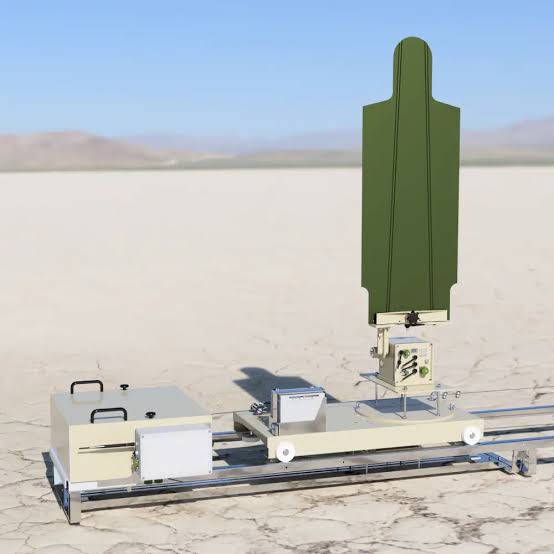
The floor runs four product families. SIT, the stationary infantry target, is a silhouette on a fixed lifter that pops up and falls when hit. MIT, the moving infantry target, puts that same lifter on a powered rail carriage so the silhouette tracks across the range. SAT and MAT are the armor equivalents, scaled up to vehicle-sized panels.
SIT is the volume product and where most of my hours go. The others come through in smaller batches, and each has its own hardware set, wiring and build sequence to switch to.
On the line
I assemble 100+ SIT systems a week in a production-line workflow, and support SAT, MIT and MAT builds as they come through. That is mechanical assembly to a drawing: frames, drive heads, fasteners torqued to spec, wiring harnesses routed and landed, batteries and controllers seated.
The part that is actually engineering is what happens when a unit does not match the drawing. I diagnose and document manufacturing non-conformities against the engineering specification and run in-process quality checks before a unit is released, so a bad build gets caught at the station rather than downrange where a stuck lifter stops a live-fire exercise.
A 50-meter track for first-article testing
I assembled a 50-meter MAT track for first-article testing, so the first units of a moving armor target build can be run on real rail and checked against the specification before production continues.
Alongside it I conduct environmental and production-line quality validation testing, and troubleshoot hardware, firmware and assembly failures through root-cause analysis, rework and inspection.
Rebuilding the SAT line
I reorganized the production floor and set up a dedicated SAT production assembly line, which made the assembly process 20% more efficient. Running it also means managing inventory and material flow so the line keeps pace with shipping deadlines.
Boards and fabrication
Beyond assembly, I program the PDB and CNC boards that drive the SIT targets using Microchip MPLAB IPE, then verify that the firmware installed correctly and that the board actually functions.
When a target fails, I reverse-engineer the failure rather than swapping parts until it passes: the fault can sit in the hardware, the firmware or the build itself, so resolving a nonconformity means root-cause analysis across all three, functional testing, on-site rework and standards-based QC to bring the unit back to production standard.
I also fabricate hardware for the floor itself. The largest piece is a floor-anchored steel fixture table, plasma cut and welded, with an evenly spaced mounting grid that securely restrains hydraulic and other high-torque assemblies while they are torqued.
Out the door
Finished units get packaged, palletized, quantity-verified against the order and staged for shipment to U.S. Army training ranges. It is the least glamorous end of the process and the one with the most obvious failure mode: a range that opens a pallet and finds the wrong count or a damaged unit has already lost the training day.
To make that stage visible, I developed a production-floor order tracking dashboard. It converts shipping-sheet completion data into live palletization progress and schedule status, so operators and engineers can see whether each order is on track for shipment.