OA-001 / Project
May 2026 – Present
Built with Claude Code
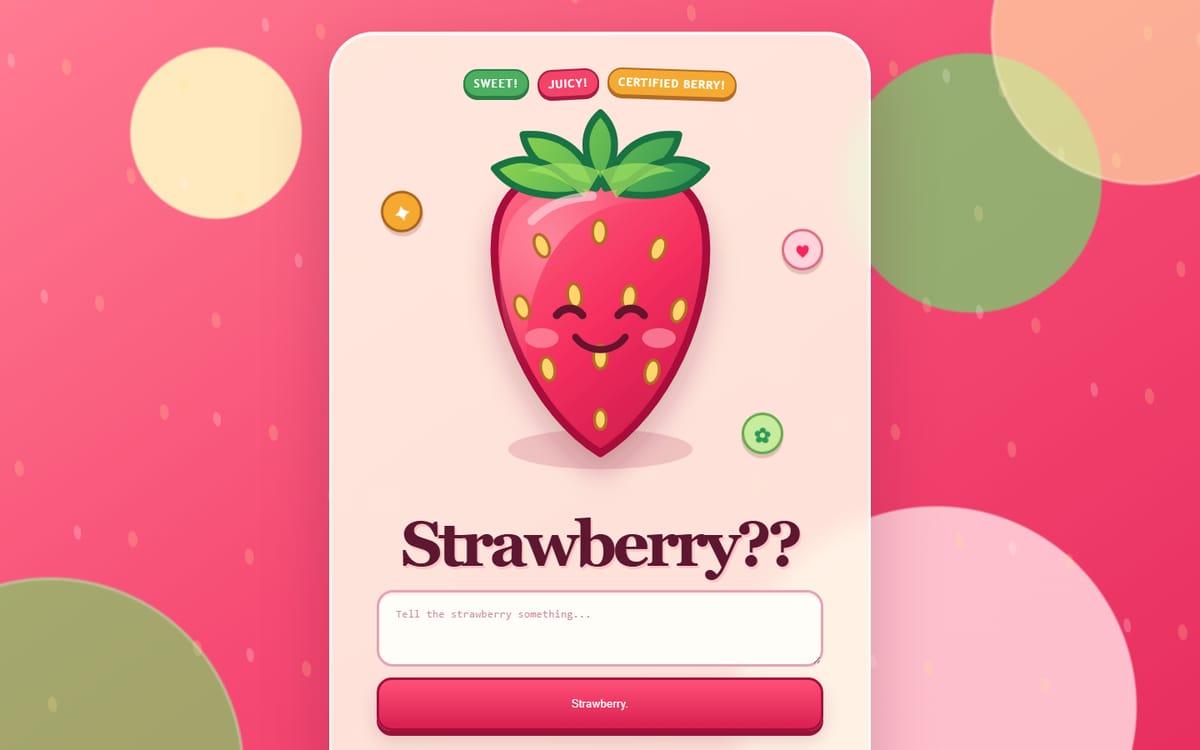
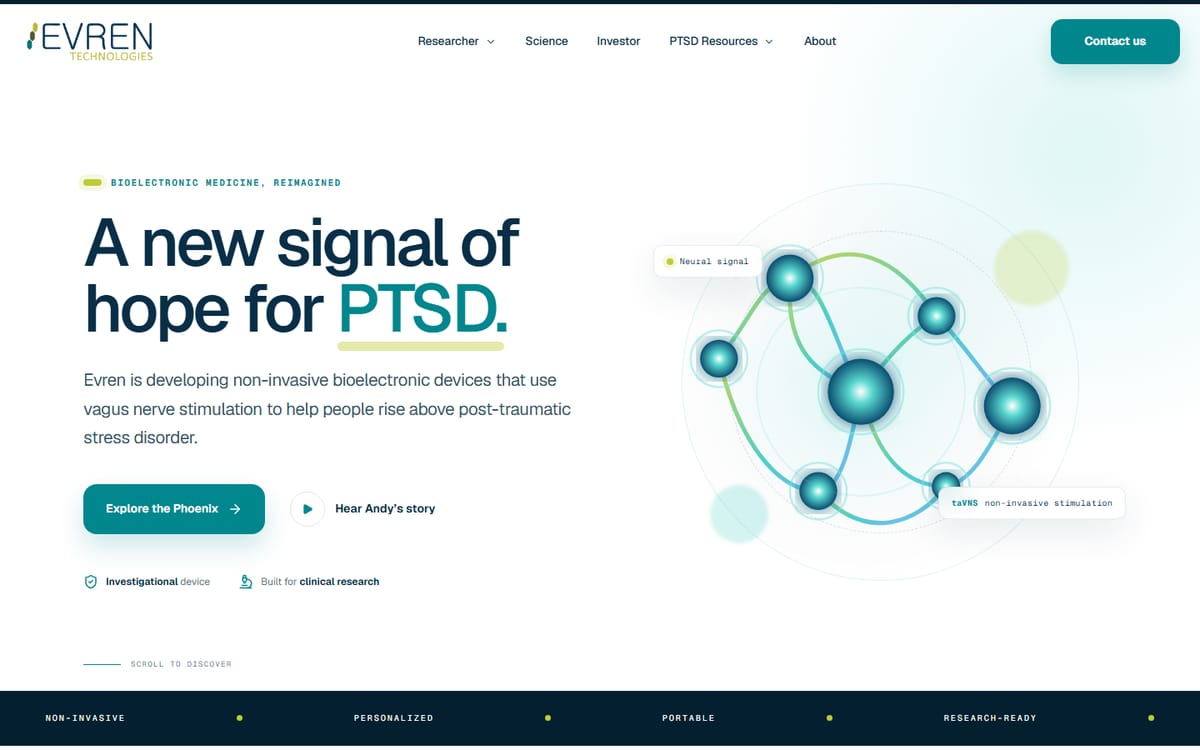
Sixteen live sites and roughly 475 commits since May 2026, from a tic-tac-toe file to a campus marketplace.
Since May 2026 Claude Code has been my main build tool. I used it to learn how to prompt properly, to automate the parts of school and work that were eating hours, and to ship real software on my own. This is everything that came out of it.
Role
Everything: the idea, the design, the build, the deployment, and the upkeep.
Organization
Self-directed
Where it started
The first thing I ever built this way was a tic-tac-toe game in a single HTML file on 11 May 2026. No build tools, no dependencies, about three hundred lines you could open by double-clicking it. It took an afternoon.
The day after, I was standing up a multi-agent dashboard with a Python backend. That gap is the whole point. The distance between having an idea and having a working version of it collapsed from weeks to hours, and once that happens you attempt things you would previously have talked yourself out of.
Learning to prompt is the actual skill
The tool is only as good as the brief. What changed my results was writing the specification before any code exists: what it has to do, what it must not do, which constraints are non-negotiable, and what done looks like. A vague ask produces confident, plausible, wrong output.
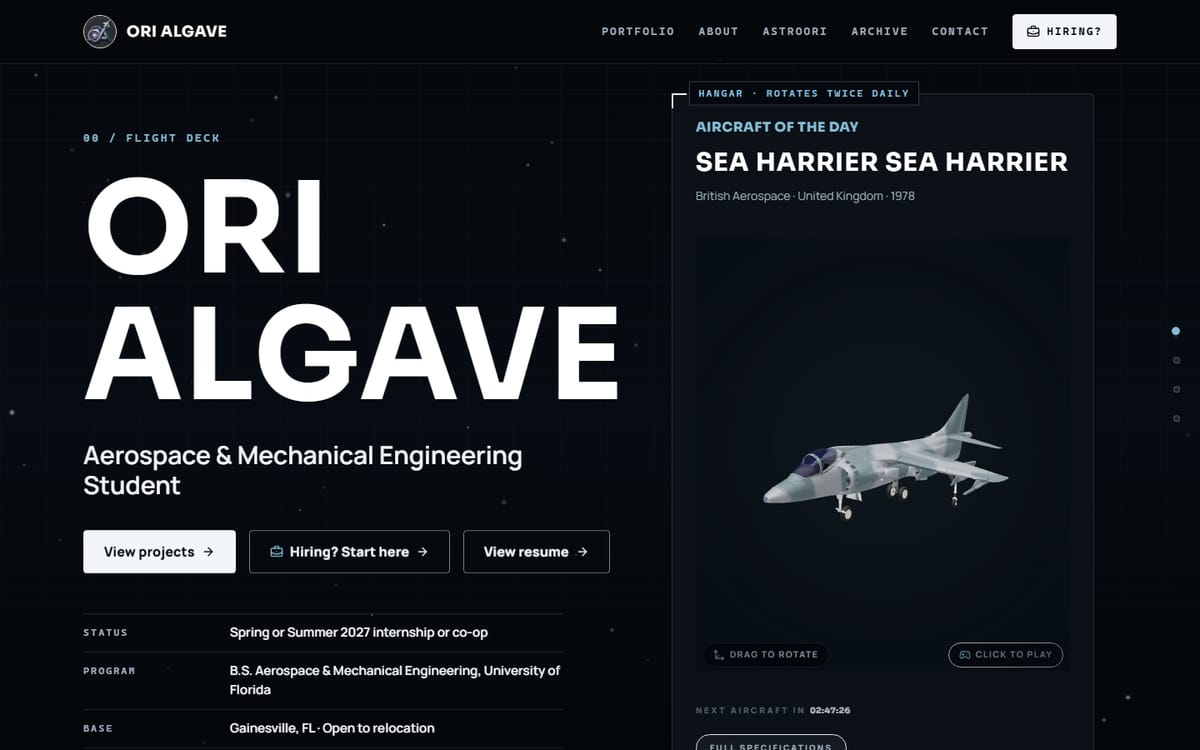
The second thing was durable context. Every repository I work in has a CLAUDE.md that records the decisions and the traps, so the reasoning survives between sessions. The one for this site runs to several hundred lines and documents things like why the aircraft rotation is frozen and why the PDF reader cannot use an iframe. Without it, the same mistakes come back every time.
The third was planning before building, and reviewing the output instead of accepting it. I read what it writes. That is what separates using it as a tool from letting it write your project for you.
A working website in about twenty minutes
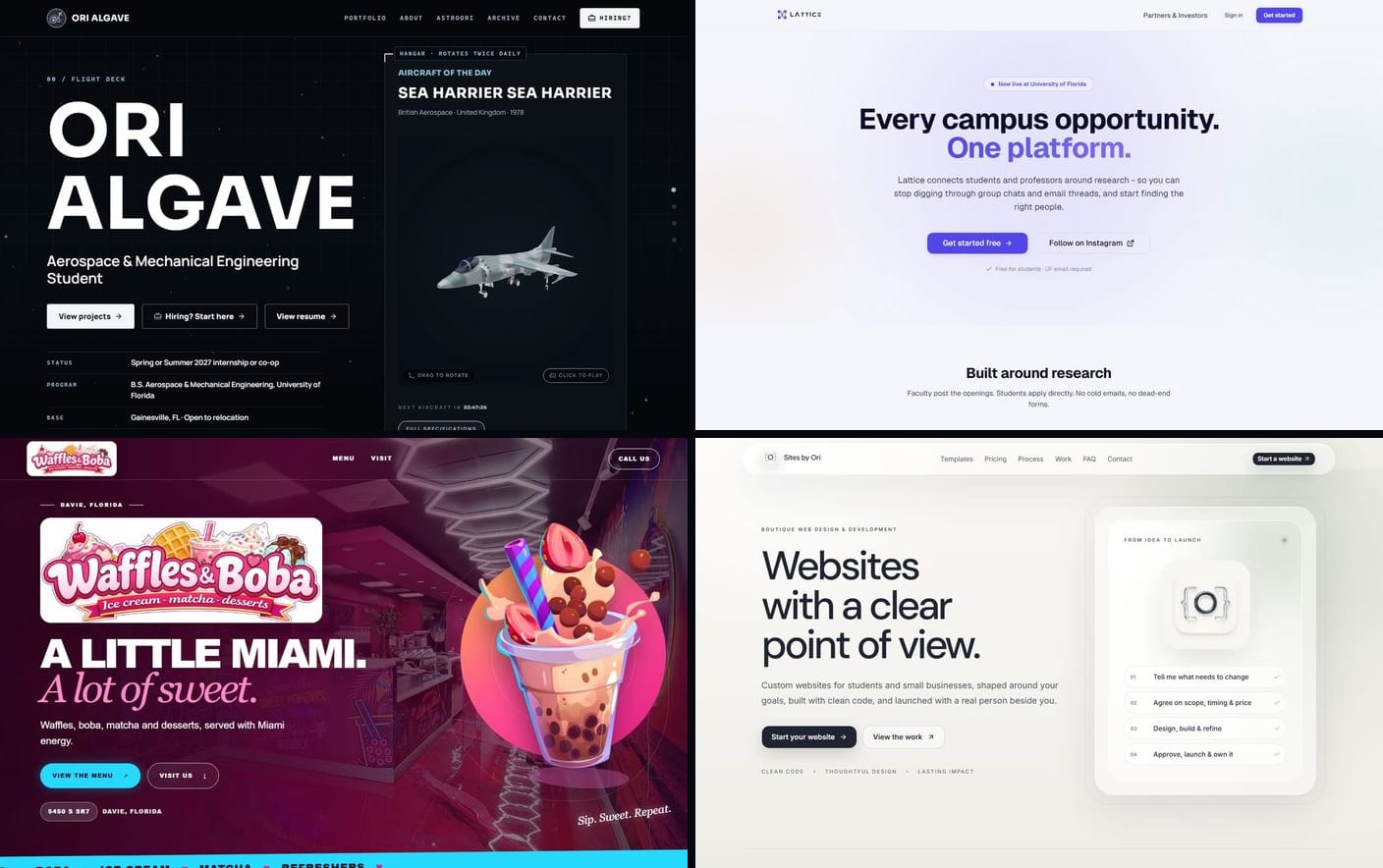
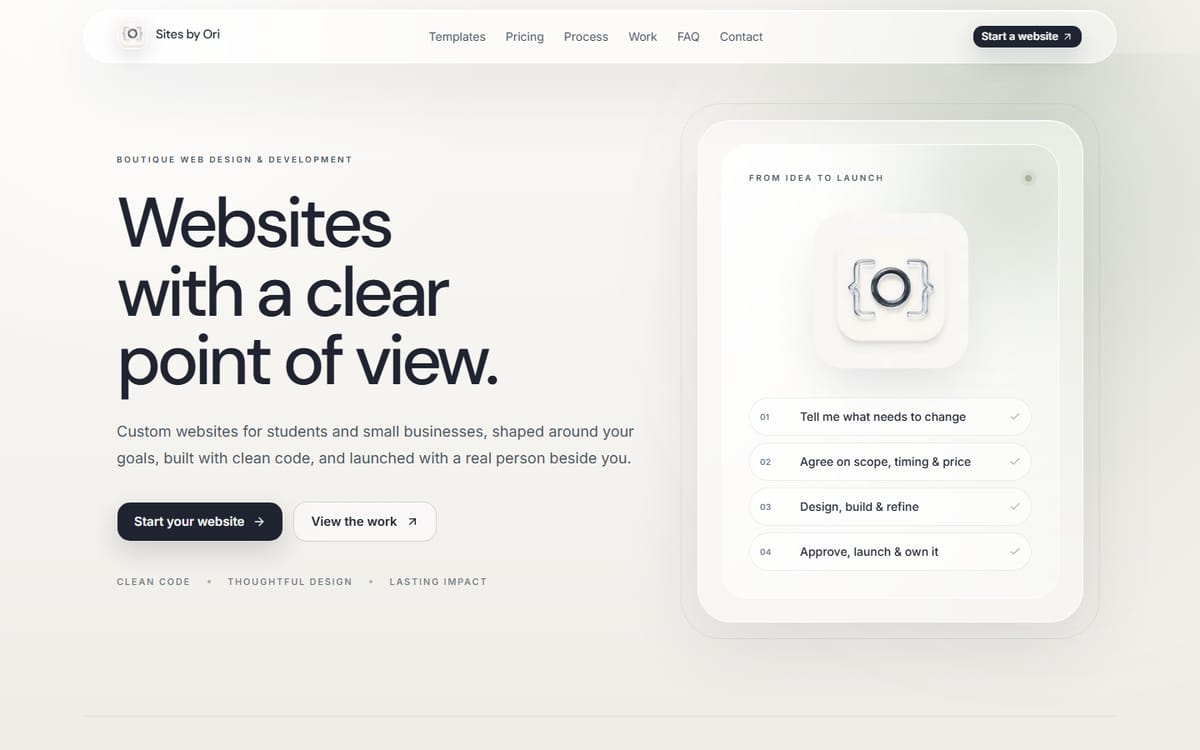
Once the workflow clicked, speed stopped being the constraint. Sites by Ori is a small web studio: the storefront, six demonstration sites covering different kinds of client, and a private dashboard behind a sign-in. The whole set went live within days of each other.
A straightforward brochure site is now about twenty minutes of work. That changes what is worth building. A friend needing a menu page, a class project that deserves a real site, an idea worth testing before committing to it, all become reasonable rather than a weekend.
Automating the parts that were wasting my time
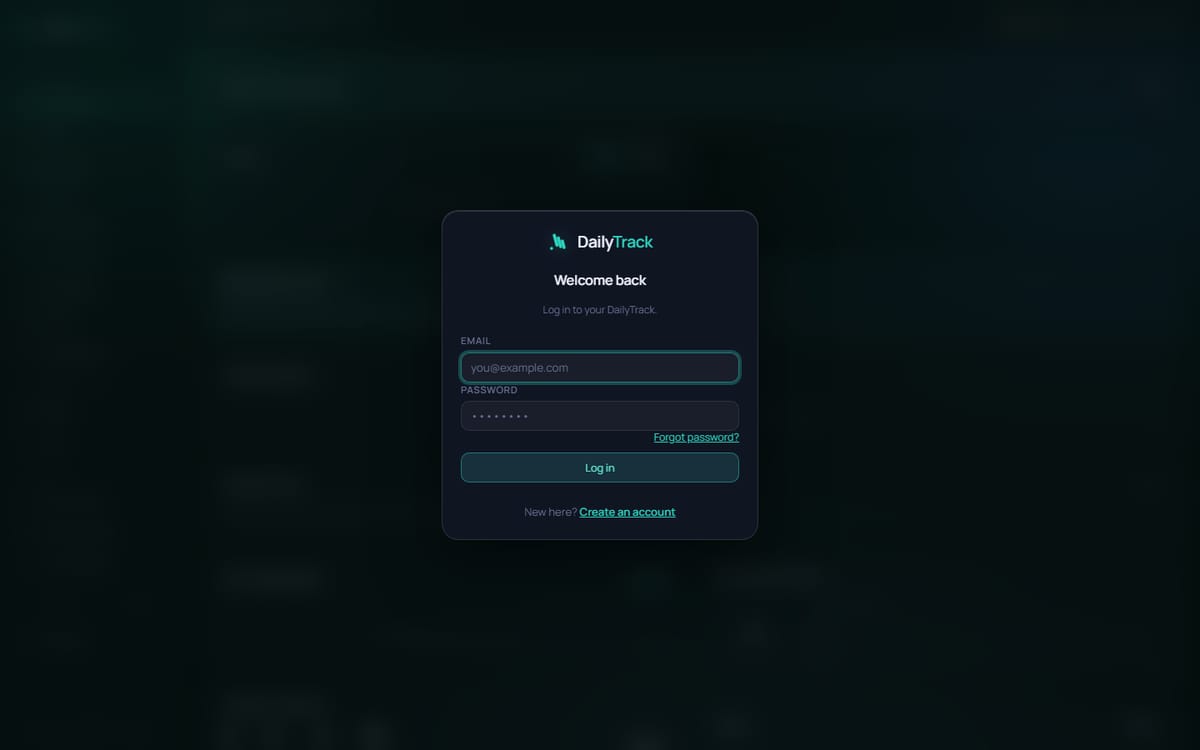
Most of what I automated was not glamorous. DailyTrack is a fourteen-tab productivity app I use daily. It works offline, syncs across devices, pulls my Canvas assignment calendar in from an .ics feed, and sends me Telegram reminders on a schedule. The tracking I used to do by hand now happens without me.
JARVIS went further as an experiment: nine specialist agents behind a mission-control dashboard, with task routing and voice control. It runs locally and I stopped short of deploying it, but it taught me how far the orchestration idea goes.
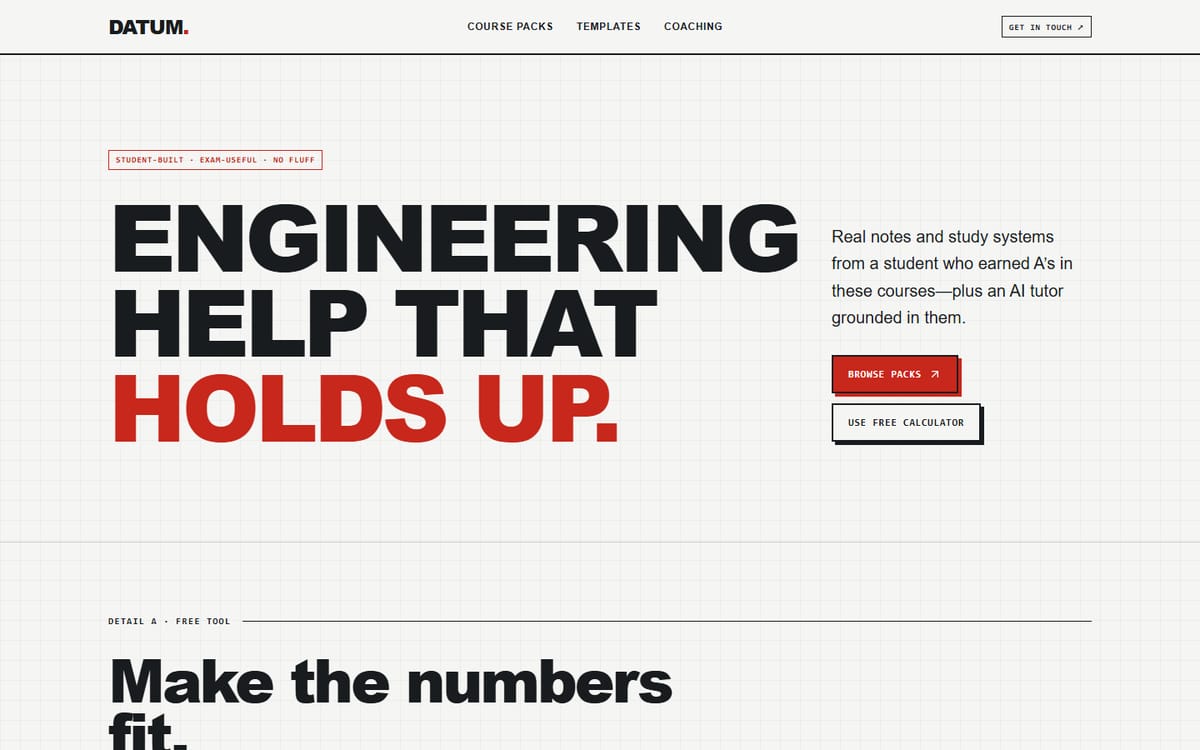
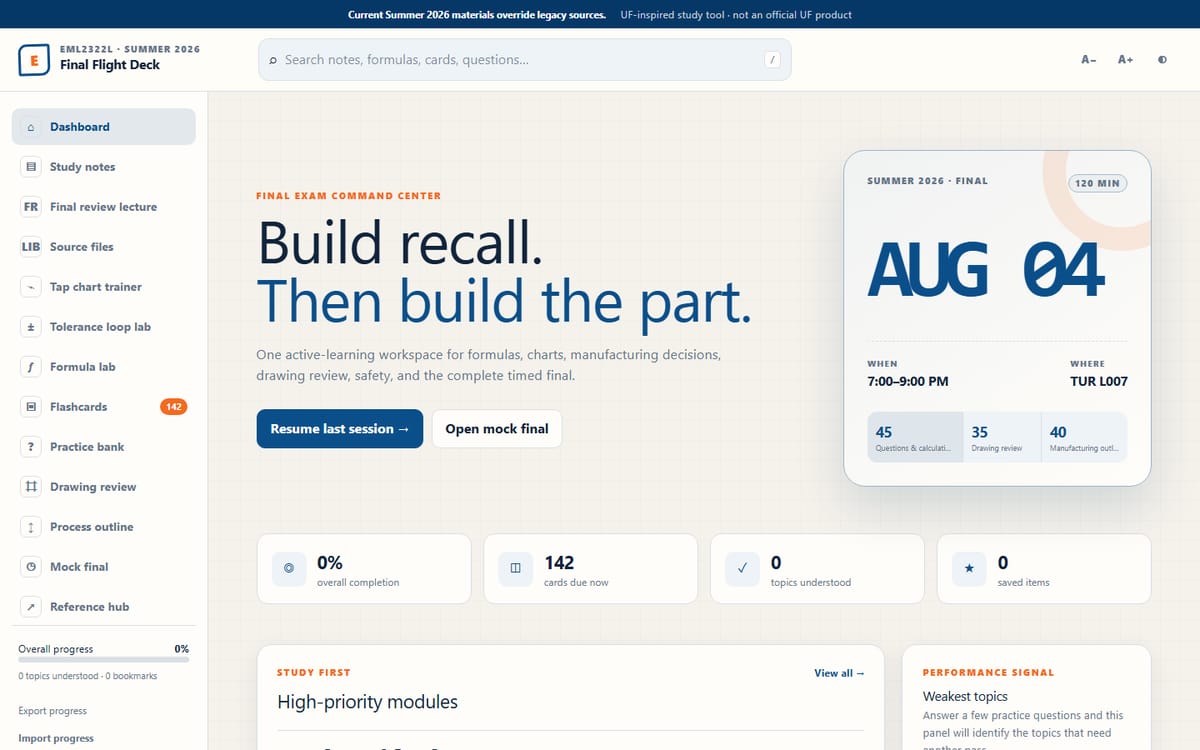
The same habit went into coursework. I wrote study guides, cheat sheets and original practice exams for core engineering courses, then packaged them into DATUM behind a per-course tutor that answers from that material instead of guessing. Dynamics Desk went further for one class: eight lessons, six homework solutions reconstructed and checked numerically, six interactive labs, and a timed exam mode, all cited back to the course documents it was built from.
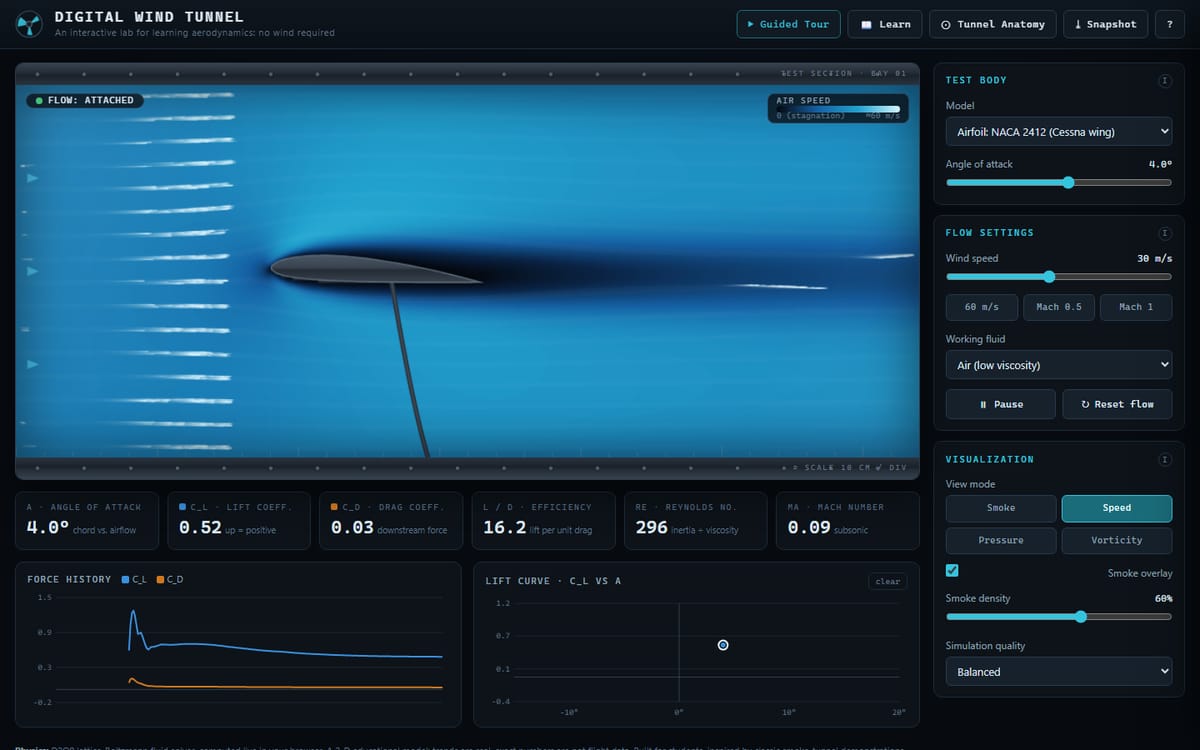
The simulations came out of the same instinct, that some things are easier to watch than to read. The Digital Wind Tunnel runs a real lattice-Boltzmann fluid solver in the browser, so you set an airfoil and an angle of attack and the wake, the lift curve and the drag coefficient develop out of the physics. Alongside the browser ones I write MATLAB and Python for the numerical work that does not need to be looked at.
Past that, research, drafting, and working through unfamiliar material all run through the same loop now. The parts of school and work that used to eat hours are the parts I spend the least time on.
What it is good at, and where it is not
It is strong at scaffolding, at refactors that touch many files at once, at unfamiliar APIs, and at writing the documentation nobody wants to write. It is very good at getting from nothing to something you can react to, which is usually the hardest part.
It is dangerous when it is confidently wrong. The clearest example I hit: the entire database layer of DailyTrack was written against a method the Neon driver does not have. Every server route failed silently, and the app looked fine because it was falling back to local storage. Nothing errored loudly. I found it by checking rather than trusting.
Design taste takes several passes and a lot of direction. And anything that depends on the real world, whether a video actually plays or hardware actually fits, still has to be verified by a person. So I read the output, I test it, and I keep the parts I can defend.
What it adds up to
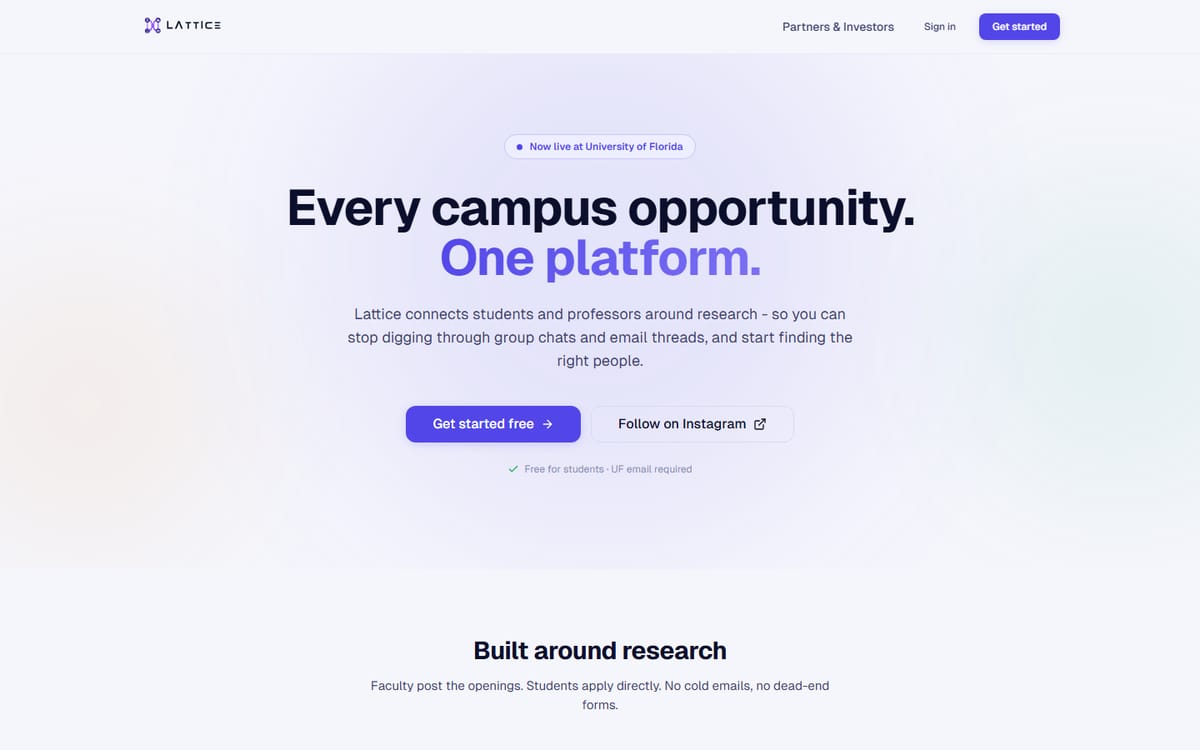
Roughly 475 commits across seven of my own repositories since 11 May 2026, and sixteen sites currently deployed. The largest is Lattice, a campus talent marketplace for the University of Florida with twenty-eight database models, sixty-six API routes, and opt-in AI screening of applicants; it is built, deployed, and in pre-launch.
None of it replaces knowing what you are building or why. It removes the part where knowing what to build and having it exist are separated by weeks of work.
Live builds
Every one of these is a real, deployed site unless the card says otherwise. Click any card to open it.
Dynamics Desk
A study application for a dynamics exam: eight lessons, six reconstructed and numerically verified homework solutions, six interactive labs, a searchable formula sheet, flashcards and a timed exam mode, every page cited back to the course documents behind it.
Private, course material
Sites by Ori dashboard
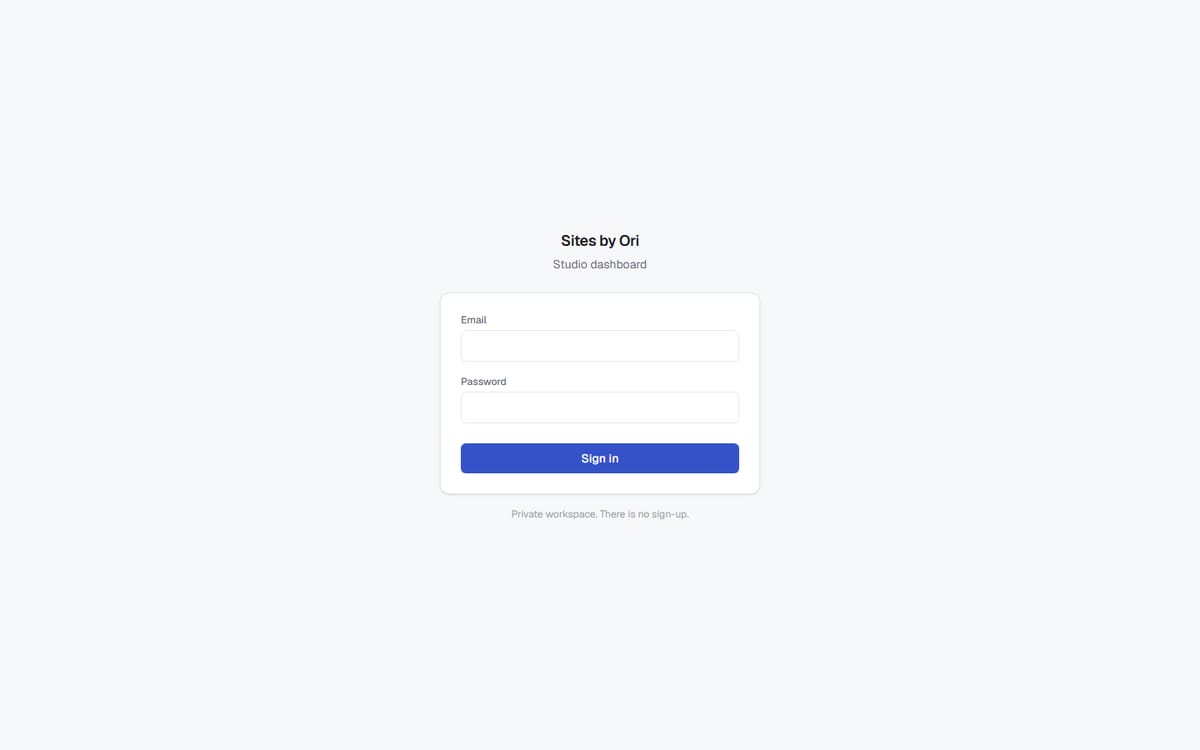
The studio's private workspace for managing client sites. There is no public sign-up, so the link would only ever show you the door.
Private, sign-in only
JARVIS
A multi-agent operating system: nine specialist agents behind a mission-control dashboard, with task routing, a Kanban board, and voice control.
Runs locally
USwap
A peer-to-peer student marketplace for trading skills. A full React app on mock data, packaged for iOS and Android with Capacitor.
Prototype, not deployed